• Feeling isolated? You're not alone.

    Join 20,000+ people who understand exactly how your day went. Whether you're newly diagnosed, self-identified, or supporting someone you love – this is a space where you don't have to explain yourself.

    Join the Conversation → It's free, anonymous, and supportive.

    As a member, you'll get:

    • A community that actually gets it – no judgment, no explanations needed
    • Private forums for sensitive topics (hidden from search engines)
    • Real-time chat with others who share your experiences
    • Your own blog to document your journey

    You've found your people. Create your free account

Post something Weird or Random

Good correction. Online articles are very inaccurate sometimes.

Also I agree, the problem wasn't the sparking skates really. It was kids having access to hairspray. You'd have to have the exact can but I would be surprised if it didn't have some form of these warnings on it.
  • Keep hairspray out of reach of children.
  • Always use hairspray in a well-ventilated space.
  • Never use hairspray near an open flame, hot surface, or other source of ignition.
I grew up with sparking toys. Never saw or heard of problems.

View attachment 114345


Aerosol cans are a different matter. Those can be quite dangerous. I remember kids using them with a lighter to make a mini flamethrower.
Well I know my Barbies given I mostly collect 80s to late 90s dolls and I knew which doll was in the picture because I have her and recognized the outfit immediately. Also Hot Skatin had a helmet where Rollerblade did not.
 
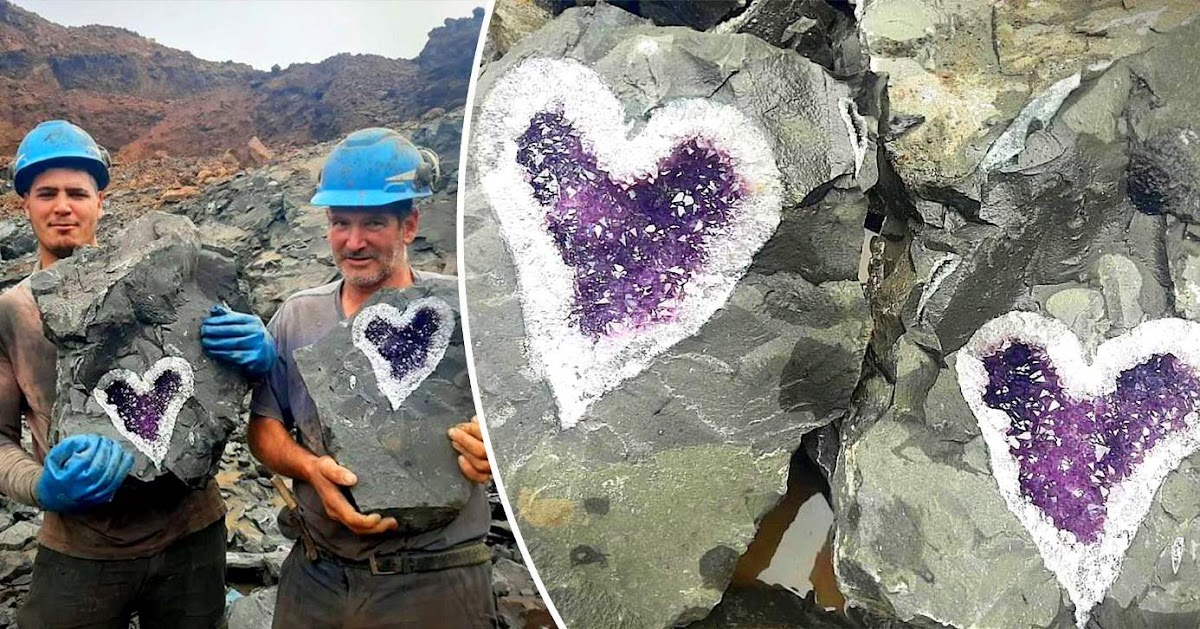
I put this in one of the game threads but thought I'd pop it here as well


Stunning%2BHeart-Shaped%2BAmethyst%2BGeodes.jpg


https://www.geologyin.com/2021/01/stunning-heart-shaped-amethyst-geode.html
 
...that is Hot Skatin (or Winter Sports depending on the region) Barbie and she is articulated...
Many articulated Barbie bodies [a.k.a. arti-Babses] had flat feet making them able to stand without support. Because of this, that body was recruited into many male-owned collections as a stand-in for hard-to-find GI Janes.

Most of my ladies have that body. I think it has better waist articulation than the more recent Made-to-Move articulated body. (MTM has more overall articulation, though.)
 
Many articulated Barbie bodies [a.k.a. arti-Babses] had flat feet making them able to stand without support. Because of this, that body was recruited into many male-owned collections as a stand-in for hard-to-find GI Janes.

Most of my ladies have that body. I think it has better waist articulation than the more recent Made-to-Move articulated body. (MTM has more overall articulation, though.)
I agree that the Made to Move Barbie body is the best for articulation but the lack of waist articulation to turn the body is the only downside. I think that the MTM body was created to have more realistic articulation and also so that the doll could be posed in yoga stances but lack of waist movement also means some poses cannot be displayed.
 
If you stretch a common polyethylene bag under a very strong microscope, you can see that as it fails, the cracks are bridged by fibers. Those are Dyneema starting to form. The stuff is just processed bag material, a chain of carbon atoms, padded out with two chains of hydrogen. I wouldn't call their finishing process annealing, though, just stress-relieving, which happens at a lower temperature. Annealing would soften the rope back into short molecular chains. Spectra fiber is similar.
In composite materials, a big game-changer was aramid fiber, or Kevlar. Unlike most materials, it is very strong and tough in tension, but quite weak in compression, and spectra is even more extreme in that way, and in lower density. If you try to sand a Kevlar surface, the broken fibers pull at the resin and break it up, releasing more length. You have to shave it off, quickly dulling many, many sharp blades.

Thank you for telling me this. I am fascinated. I want to learn more. Can you suggest how I can study Dyneema and Spectra? I have used it for years and I want to know as much as I can. I have so many questions.
 
Thank you for telling me this. I am fascinated. I want to learn more. Can you suggest how I can study Dyneema and Spectra? I have used it for years and I want to know as much as I can. I have so many questions.
I don't remember just how I learned about particular fibers. I was just keen for all the news about composite materials and general lightweight construction. Rope makers don't develop fibers; they are textile workers for what becomes available. To study fibers in isolation is difficult, but I find the whole field fascinating, and one of the pioneers is also a superb author - J.E. Gordon. "The New Science of Strong Materials" goes into detail on how fiberglass began, and just what is going on at the tip of crack. "Structures" also includes a lot on materials, and has a superb section on lightweight design, and why we use ropes.
 

New Threads

Top Bottom