• Feeling isolated? You're not alone.

    Join 20,000+ people who understand exactly how your day went. Whether you're newly diagnosed, self-identified, or supporting someone you love – this is a space where you don't have to explain yourself.

    Join the Conversation → It's free, anonymous, and supportive.

    As a member, you'll get:

    • A community that actually gets it – no judgment, no explanations needed
    • Private forums for sensitive topics (hidden from search engines)
    • Real-time chat with others who share your experiences
    • Your own blog to document your journey

    You've found your people. Create your free account

Time to Get Electrical

These are all great ideas, thank you!

Yeah, I have a bunch of condensers around that I use on the regular but I'm wanting to either use pickups or contacts so I can really juice those FX as hard as possible (and use distortion, of course!). Apparently people use even external ones, which I guess might work well-enough if it's sitting still on a table
If you go for guitar pickups you could probably go with a "Fast track" or "Lipstick" pickup as they don't use individual poles that need to be lined up for the best result. There's nothing that says you have to put the pickups into the body of the instrument either. You could build a device that clamps onto the kalimba with the pickups facing upside down and get basically the same result and it means you don't have to cut any holes into it and it can be easily returned to its previous state of needed :-)
 
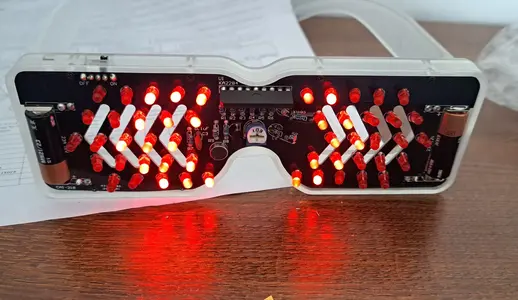
Finally finished my light harp

1000004497.webp
1000004492.webp
 
I like wiring. I don't use wi-fi, and have never owned a TV remote control. I'm currently re-arranging all my computer and audio gear, so it gets tedious, but there's one less layer to the onion when chasing problems. I'll also be re-wiring my RV accessories into a new car. I'm using the power connectors from RC models for high capacity and minimum size.
I enjoy house wiring, too. One time, I was given a 220 Volt monitor, and I used the same trick I'd used earlier to use a junk stove element as a hot plate by holding it in the shop vise. I made an extension cord with two plugs and one outlet, using the hot wire from each plug and ignoring the grounds. If you plug it in to two different wall sockets, you get either 220 volts, or a nice, safe zero. Just don't have it plugged in if someone is trying to work on one of the circuits you are using.
That's zero volts between the outputs - you could still get a shock from a ground. There are a surprising number of live, ungrounded things around that are mainly dangerous if they are within reach of plumbing where someone might touch both. I have the ability to sense AC on a surface, even those touch-sensitive lamp switches. Bizarrely, I also get it on a small brass object near a computer power supply.
In old, now-crowded houses it was not unusual to have people complain about one fuse always blowing. (circuit breakers are a big improvement) I'd open up the panel, and see two or three wires on that one fuse. I'd make a map of which fuses ran what, and re-arrange the pairs for a better balance, solving the problem.
 
Last edited:
Top Bottom