
• Feeling isolated? You're not alone.

    Join 20,000+ people who understand exactly how your day went. Whether you're newly diagnosed, self-identified, or supporting someone you love – this is a space where you don't have to explain yourself.

    Join the Conversation → It's free, anonymous, and supportive.

    As a member, you'll get:

    • A community that actually gets it – no judgment, no explanations needed
    • Private forums for sensitive topics (hidden from search engines)
    • Real-time chat with others who share your experiences
    • Your own blog to document your journey

    You've found your people. Create your free account

difference between harlequin 'n clown

Kayla55

Well-Known Member
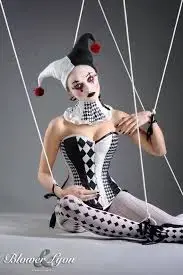
Question: other than circus performer, is there reason harlequin was different from a jester or a clown?

Harlequin (; Italian: Arlecchino [arlekˈkiːno]) is the best-known of the zanni or comic servant characters from the Italian commedia dell'arte. The role is traditionally believed to have been introduced by Zan Ganassa in the late 16th century,

Harlequin A conventional buffoon of the commedia dell'arte, traditionally presented in a mask and parti-colored tights.

Masking and social clutz... I suppose women clowns were not popularised!!
 

Attachments

  • download (31).webp
    download (31).webp
    8 KB · Views: 52
I think a harlequin is something that spesifically belongs in the theatre world. And more spesific, the Italian theatre world. A jester would work for a nobleman or a monarch to entertain guests in his home. And a clown is a funny person in a clown costume that can be found pretty much anywhere. :) In the circus, in someones backyard during a childs birthday, roaming the streets of Gotham City, and so on.
 
Question: other than circus performer, is there reason harlequin was different from a jester or a clown?

Harlequin (; Italian: Arlecchino [arlekˈkiːno]) is the best-known of the zanni or comic servant characters from the Italian commedia dell'arte. The role is traditionally believed to have been introduced by Zan Ganassa in the late 16th century,

Harlequin A conventional buffoon of the commedia dell'arte, traditionally presented in a mask and parti-colored tights.

Masking and social clutz... I suppose women clowns were not popularised!!
Exactly right. And initially the harlequin and slapstick buffoonery were wedded together. My favorite clown is Papageno in Mozart's The Magic Flute, an intense and nearly psychedelic opera.
 
In the early 1990s, nearly every teenage girl I knew had a lavender-colored pastel painting of a harlequin, and those comedy and tragedy masks as decorations in her room. It was a huge fad.
 
In the early 1990s, nearly every teenage girl I knew had a lavender-colored pastel painting of a harlequin, and those comedy and tragedy masks as decorations in her room. It was a huge fad.

I remember seeing versions on wall decor (paintings/plaques) a whole lot in 60s/70s time frame. Usually in more well-to-do homes. Orange was a common dominant color.

harle.webp
 
So if jesters also were politically opinionated and opinion acknowledged by nobility then their roles were multilayered not just entertainment.
Maybe harlequin was also more sophisticated portrayal and reaching for higher level of humour n understanding.
 
Top Bottom