• Feeling isolated? You're not alone.

    Join 20,000+ people who understand exactly how your day went. Whether you're newly diagnosed, self-identified, or supporting someone you love – this is a space where you don't have to explain yourself.

    Join the Conversation → It's free, anonymous, and supportive.

    As a member, you'll get:

    • A community that actually gets it – no judgment, no explanations needed
    • Private forums for sensitive topics (hidden from search engines)
    • Real-time chat with others who share your experiences
    • Your own blog to document your journey

    You've found your people. Create your free account

Asbestos Concern

Automobile brake parts are made from asbestos.
I'm sure this was true until the 80s/90s but I'm fairly sure that other materials are used now for clutches/brake pads? There's a warning in the Haynes manual for my car but in a later revision, (that unfortunately I don't own a copy of any more) the warning was amended. The new version added that only older parts were likely to be made from asbestos but it was advised not to breathe the dust regardless. I only have a couple of copies of the first edition not the later one so I can't confirm it.

EDIT: I did a quick search and I found that in the UK the use of asbestos began to be phased out in the 80s but it may still be used in the US and some other places. Older cars (like mine) may still have clutches from the 80s or dust from old clutches in the transmission casing so its still best to be careful.
 
Last edited:
I wouldn't worry so much about three boards of possible asbestos.

When I was in school, there were pipes with asbestos warnings along the ceilings. Some of the more delinquent boys would jump up in the air with a pencil, and poke holes in the insulation, making the asbestos powder snow down on people walking behind them in line.

Also I grew up rurally with very little to do as a child. There was a crack in the siding on kitchen wall and when no one was looking, I would sit and pull out little bits of 1960s era insulation through the crack.

I later learned when grandpa resealed the wall that the insulation contained asbestos. He had to put up plastic sheets in the kitchen to minimize exposure.

And I had been playing with it for years. Slowly pulling the little fluffs out like strings of cotton candy.

So, if I'm okay, you'll be okay.

You know, my dad worked at a nuclear power plant back in the 60s, pushing around carts of nuclear waste in his jeans and tee shirt, back before anyone knew the dangers. And he lived to be a good old age.

A lot of what we worry about never comes to pass.

But if you're really worried, you could call in an inspector, but personally I'd rather keep the money it would take to hire one.
 
Get s hose and rinse it all down once. All of the asbestos dust will be gone, but it wouldn’t hurt anyone even if you don’t.
I have a question on this. The ash/debris pile is outside and as a result it has been rained on a few times. Once it dries out, wouldn't the asbestos dust remain and easily kicked up into the air? I ask because my dad has already began piling up wood and other items on the ash pile to prepare for another fire eventually. I would think there is a risk of disturbing any potential remaining asbestos fibers into the air each time he adds anything to the pile. Resulting in him potentially breathing it in or getting on his clothes or shoes.

I don't think my dad is educated on the risks of asbestos so I do not trust his judgement at all on this.
 
As I have researched more about asbestos, I've learned that farmers can be an at risk occupation for asbestos exposure. Many farm buildings have building materials that contained asbestos along with farming supplies and soil conditioners. Additionally, it may be found in machinery. Growing up on a dairy farm, I imagine I have been exposed from time to time over the years. It is difficult to know one way or another.

I have unfortunately become obsessed with asbestos and the risks of asbestos the past several weeks.
 
It's outside dilution is the solution. As with covid I only caught it while inside. Keep in mind asbestos is a mineral mined from the ground.
 
I have a question on this. The ash/debris pile is outside and as a result it has been rained on a few times. Once it dries out, wouldn't the asbestos dust remain and easily kicked up into the air? I ask because my dad has already began piling up wood and other items on the ash pile to prepare for another fire eventually. I would think there is a risk of disturbing any potential remaining asbestos fibers into the air each time he adds anything to the pile. Resulting in him potentially breathing it in or getting on his clothes or shoes.

I don't think my dad is educated on the risks of asbestos so I do not trust his judgement at all on this.
The reality is that asbestos fibers are much lije sand. It’s dusty until wet, and becomes dusty again when dry. BUT…. even though asbestos is definitely linked to diseases of the lungs, it’s a lot like smoke from a fireplace. A little never hurt anyone. It’s going to take a LOT more exposure than a little dust from a pile of dusty debris outdoors for a few minutes.

Think of second hand smoke. Toxic? Yes. But it’s only ever had a real effect on people who lived with it every day for years and years.
 
I have done asbestos abatement on antique radios and it's safer if you were to wet it down first to keep dust in one place. Dig the hole and spray the boards with the garden hose and bury them, and you should be good.
 
I have done asbestos abatement on antique radios and it's safer if you were to wet it down first to keep dust in one place. Dig the hole and spray the boards with the garden hose and bury them, and you should be good.
We removed some plasterwork which appeared to have some asbestos in it when I looked at samples under a microscope. We did the same thing and wet down the plaster first and carefully removed small sections while wearing breathing masks that could filter any particles out. We placed it into bags and sealed it and took it to the appropriate facility for disposal. It was really just a precaution as I could only be so sure it contained asbestos.

I think its always wise to take precautions with potentially dangerous substances. My grandad was a miner and he inhaled nasty stuff at work. Even though his health deteriorated due to other work related damage which put an early end to his mining career, he still developed severe breathing problems which ultimately contributed to his death.

So an abundance of caution is always the smart move I think.
 
The reality is that asbestos fibers are much lije sand. It’s dusty until wet, and becomes dusty again when dry. BUT…. even though asbestos is definitely linked to diseases of the lungs, it’s a lot like smoke from a fireplace. A little never hurt anyone. It’s going to take a LOT more exposure than a little dust from a pile of dusty debris outdoors for a few minutes.

Think of second hand smoke. Toxic? Yes. But it’s only ever had a real effect on people who lived with it every day for years and years.
I hope you are right. I definitely agree that those at highest risk are for individuals who have worked or lived with it over a long period such as several years or even decades. However, based on what I have read I do believe that breathing in asbestos fibers is more hazardous than smoke from a fireplace given that our bodies are generally unable to remove the fibers from our lungs.

My concern now is repeated exposure if my family continues to use the same burn pile for additional fires. I am unable to identify any potential remaining materials in the burn pile that could be hazardous, but in my mind it could come in the form of the debris and ash at the bottom. Also, I don't have a whole lot of control over what is done because it is not my property. My dad does not understand the risks or does not care and my brother has not given much thought to it. My brother is much more involved with the farm than I have.

I am also concerned about secondhand exposure of dust getting on clothes and thus getting into my parent's house. To me, that would mean they could be breathing it in daily and exposing anyone else that visits and goes into the house. It probably would be lower concentrations of exposure, but if it is in the house would be over a long period of time. Perhaps second hand exposure is only an issue for a family where a worker is bringing back the dust back into the home on a daily basis over many years - I'm not sure.

I definitely have issues with OCD and this has triggered obsessive thoughts. It is about the worst situation to trigger OCD. Lack of control (given it is not my property), difficult/impossible to measure fibers in the air, and there being no immediate symptoms of exposure, and no concrete way to measure the long term risk.
 
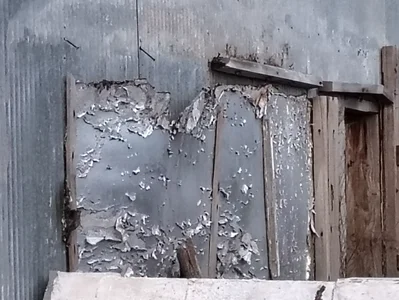
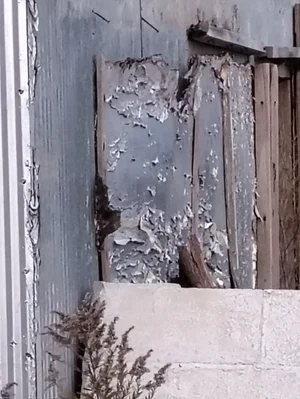
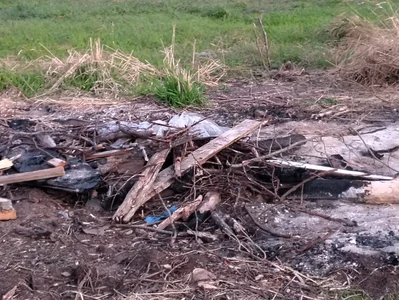
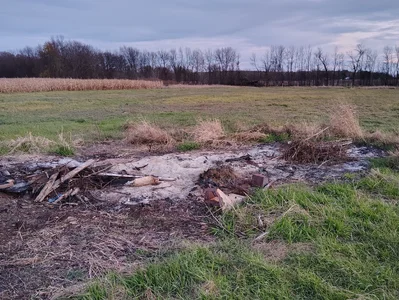
I've attached some photos of the remaining suspected asbestos insulation boards that are still attached to the outside of the still standing shed. Also a few photos of the burn pile.
 

Attachments

  • IMG_20251102_165333996_HDR.webp
    IMG_20251102_165333996_HDR.webp
    237.9 KB · Views: 15
  • IMG_20251102_165355918_HDR.webp
    IMG_20251102_165355918_HDR.webp
    158.7 KB · Views: 17
  • IMG_20251102_165618512_HDR.webp
    IMG_20251102_165618512_HDR.webp
    496.2 KB · Views: 17
  • IMG_20251102_165611326_HDR.webp
    IMG_20251102_165611326_HDR.webp
    1.3 MB · Views: 17
I've attached some photos of the remaining suspected asbestos insulation boards that are still attached to the outside of the still standing shed. Also a few photos of the burn pile.
Your concerns are definitely in line with the actual dangers of asbestos exposure. However the issue is how much is too much?

If I take the example of automobile brake pads and shoes as an example…… That black dust on the rims of every car has asbestos in it. It’s used because of the extreme heat from friction when braking. It’s absolutely everywhere that cars are slowing down. In the air, on the ground, etc. Just standing near a busy intersection or driving on the freeway exposes us to that dust, and therefore deposits it in our lungs. In a perfect world, this could never be allowed. But asbestos is the only inexpensive material we have that can provide the friction without catching fire. City living does correlate to respiratory problems in those with chronic lung conditions, but not asbestosis or mesothelioma.

I understand that you’re being cautious. Perhaps hire a handyman or a day-laborer to dig out the fire pit and refill it with clean dirt? Dig a hole somewhere else on the property, bury the contaminated soil, and used some clean dirt to ‘rebuild’ the fire pit. I would personally do the work without any concern for the asbestos exposure, and happily accept $$ for my labor.
 
Your concerns are definitely in line with the actual dangers of asbestos exposure. However the issue is how much is too much?

If I take the example of automobile brake pads and shoes as an example…… That black dust on the rims of every car has asbestos in it. It’s used because of the extreme heat from friction when braking. It’s absolutely everywhere that cars are slowing down. In the air, on the ground, etc. Just standing near a busy intersection or driving on the freeway exposes us to that dust, and therefore deposits it in our lungs. In a perfect world, this could never be allowed. But asbestos is the only inexpensive material we have that can provide the friction without catching fire. City living does correlate to respiratory problems in those with chronic lung conditions, but not asbestosis or mesothelioma.

I understand that you’re being cautious. Perhaps hire a handyman or a day-laborer to dig out the fire pit and refill it with clean dirt? Dig a hole somewhere else on the property, bury the contaminated soil, and used some clean dirt to ‘rebuild’ the fire pit. I would personally do the work without any concern for the asbestos exposure, and happily accept $$ for my labor.
I guess no one truly knows how much is too much and it may be different amounts for different people. It is clear that in can cause chronic conditions and deadly diseases in some instances. I believe firefighters have an increase risk in developing cancers including mesothelioma, although they probably are exposed of a wide variety of toxins along with asbestos. My parents own the property so my control is somewhat limited in terms of what is done.

Presently, I am even more concerned about inside of my parent's barn. There have not been any cattle or animals in the barn now for almost 15 years. The past few years my brother has done some work in the back of the barn because he has some ideas of what he wants to do with the space. He knocked down the sides of several animal pens. Now I have concerns that this could have potentially realized asbestos in the barn. He said one of the sides knocked down was made of concrete curb and very strong steel. I read that cement can often times contain asbestos. He has not told me what some of the other pen walls consisted of. Now I have serious concerns over whether that realized a significant amount of asbestos dust and still remains. My concern is that there is still a risk of being and working in the barn. I am not in there much, but my brother has spent a fair amount of time there and my dad has as well. Secondly, I am concerned about my dad and others going in there and tracking dust back into the home. My dad will leave his shoes on all day and walk around the house with them on.

My dad and brother have been fairly dismissive about my concerns and this is partly what is causing a higher level of anxiety. I personally want to look into having the air tested in the barn and if that is high, I think the house should be tested. Although, I am not sure if it would yield accurate results since much of the dust probably would have settled on the ground. The challenge with this stuff is I cannot buy a monitor and test for it on my own.
 

New Threads

Top Bottom