• Feeling isolated? You're not alone.

    Join 20,000+ people who understand exactly how your day went. Whether you're newly diagnosed, self-identified, or supporting someone you love – this is a space where you don't have to explain yourself.

    Join the Conversation → It's free, anonymous, and supportive.

    As a member, you'll get:

    • A community that actually gets it – no judgment, no explanations needed
    • Private forums for sensitive topics (hidden from search engines)
    • Real-time chat with others who share your experiences
    • Your own blog to document your journey

    You've found your people. Create your free account

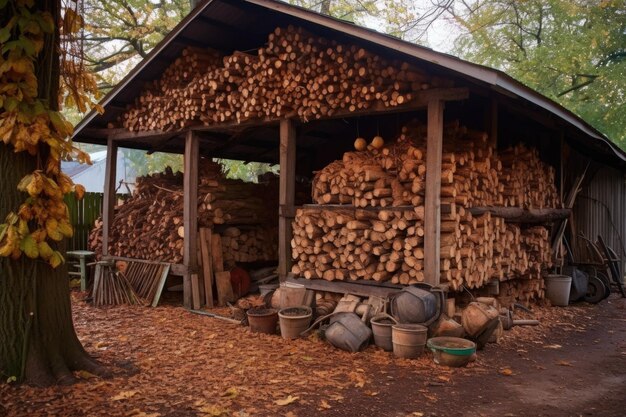
Post pictures of things organized neatly

book-stack.jpg
 
1701216972291.webp


A demonym (/ˈdɛmənɪm/; from Ancient Greek δῆμος (dêmos) 'people, tribe', and ὄνυμα (ónuma) 'name') or gentilic (from Latin gentilis 'of a clan, or gens')[1] is a word that identifies a group of people (inhabitants, residents, natives) in relation to a particular place.[2] Demonyms are usually derived from the name of the place (hamlet, village, town, city, region, province, state, country, and continent).[3] Demonyms are used to designate all people (the general population) of a particular place, regardless of ethnic, linguistic, religious or other cultural differences that may exist within the population of that place. Examples of demonyms include Cochabambino, for someone from the city of Cochabamba; French for a person from France; and Swahili, for a person of the Swahili coast.

As a sub-field of anthroponymy, the study of demonyms is called demonymy or demonymics.

Since they are referring to territorially defined groups of people, demonyms are semantically different from ethnonyms (names of ethnic groups). In the English language, there are many polysemic words that have several meanings (including demonymic and ethnonymic uses), and therefore a particular use of any such word depends on the context. For example, the word Thai may be used as a demonym, designating any inhabitant of Thailand, while the same word may also be used as an ethnonym, designating members of the Thai people. Conversely, some groups of people may be associated with multiple demonyms. For example, a native of the United Kingdom may be called a British person, a Briton or, informally, a Brit.

Some demonyms may have several meanings. For example, the demonym Macedonians may refer to the population of North Macedonia, or more generally to the entire population of the region of Macedonia, a portion of which is in Greece. In some languages, a demonym may be borrowed from another language as a nickname or descriptive adjective for a group of people: for example, Québécois, Québécoise (female) is commonly used in English for a native of the province or city of Quebec (though Quebecer, Quebecker are also available).

In English, demonyms are always capitalized.[4]
Demonym - Wikipedia
 
Top Bottom